Episode 1 · 4 min
Artificial Turf Drainage Problems: What San Diego Homeowners Need to Know
Puddles, mud, and soggy spots do not disappear under new turf. Learn why grading, base preparation, and drainage should be addressed before installation begins.
Listen to the Episode
Watch on YouTube
Open on YouTubeFull Transcript
If you ever walk into your backyard after it rains and find puddles, mud, or areas that seem to stay wet forever, you might have a drainage problem. And if you're thinking about installing artificial turf, this is something you definitely want to address before the turf goes down.
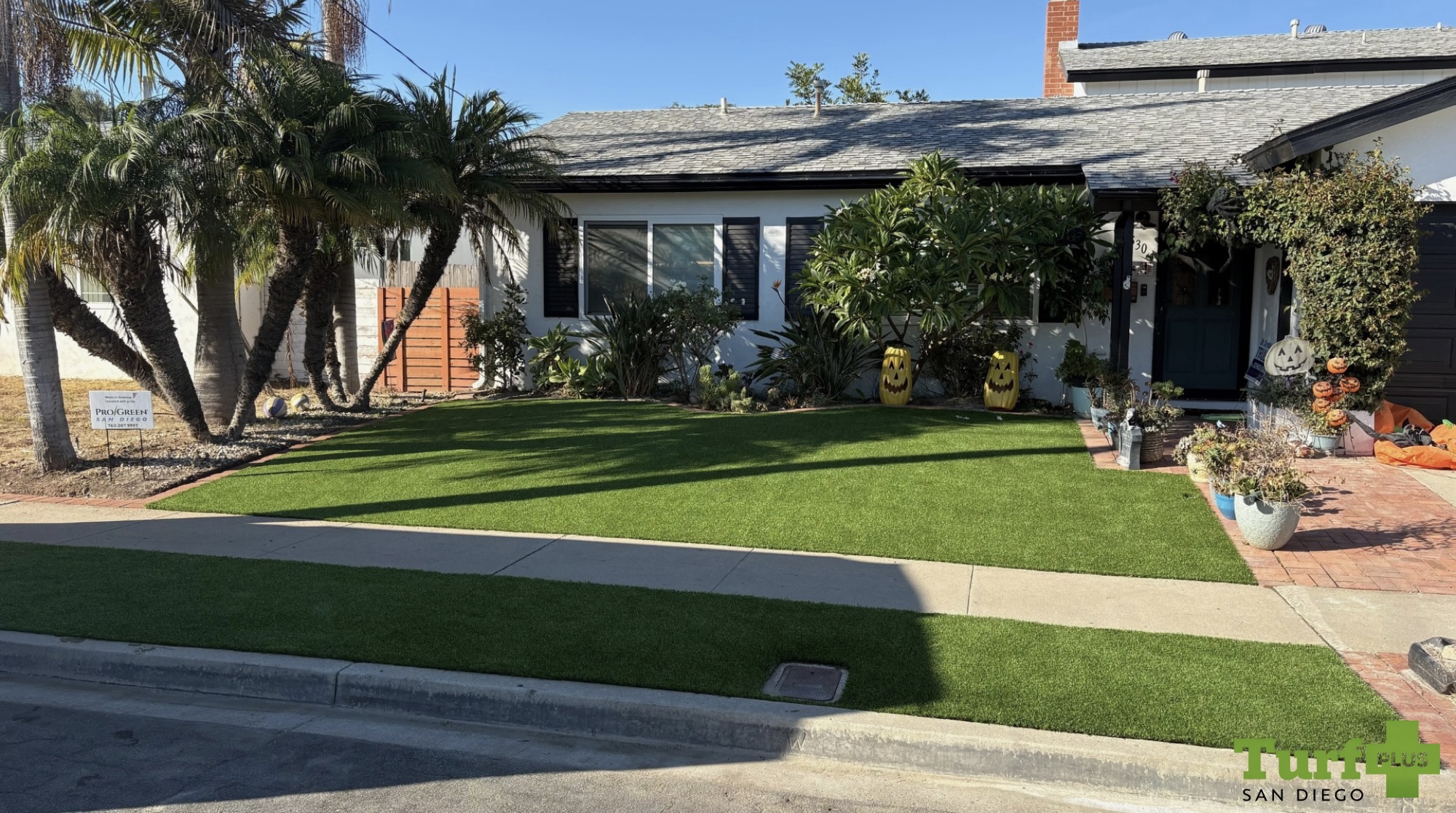
I'm Pablo with Turf Plus here in San Diego. And today I want to talk about one of the most important and probably least exciting parts of artificial turf installation: what's underneath it. Because when you look at a beautiful finished turf project, you see the green grass. What you don't see is all the work underneath that made the finished yard possible. And that's where a good installation really starts.
One mistake homeowners can make is assuming artificial turf itself is going to fix an existing drainage problem. That's not necessarily true. If water is already pooling in one section of a yard, there's usually a reason. Maybe the yard isn't graded correctly, maybe you have compacted soil that doesn't absorb water very well, maybe water from your roof, patio, or another part of the property is being directed to that area. Or maybe there's simply nowhere for the water to go. Putting artificial turf over the problem doesn't automatically make the problem disappear.
That's why preparation is so important. Before turf is installed, the existing area needs to be evaluated and prepared properly. Depending on the property, that can involve removing the existing grass and soil, establishing the proper grade, installing and compacting the base, and making sure water has a way to move through or away from the area. And every yard is a little different.
This is especially important if you're comparing estimates. Let's say you get three quotes for your backyard. One company is considerably cheaper than everybody else. Naturally, you're probably thinking, why wouldn't I just go with them? And maybe they're offering a great deal, but you also want to understand exactly what's included. How are they preparing the area? What are they doing for the base? Are they addressing the drainage? What happens to the water when it rains? Those aren't glamorous questions, but they can be a lot more important than picking between two different shades of green turf. Because the last thing you want to do is spend money making your backyard beautiful, then discover during the first heavy rain that you've still got water sitting there that shouldn't be.
And drainage isn't only about rain. Think about sprinklers from surrounding landscaping, water coming off hardscape, washing down your patio, or even regularly rinsing an area if you have pets — that water needs somewhere to go.
So if you're considering artificial turf and you've noticed standing water, mud, or drainage issues around your property, mention it before that installation begins. Don't cover the problem, address it.
At Turf Plus, we look at more than just what your yard is going to look like when you're finished. We want to understand how the space works and how you're going to use it, so we can recommend the right approach for your property.
If you are in San Diego and you're considering artificial turf, especially if you're dealing with a muddy yard or drainage issue, visit turfplussd.com or give us a call at (858) 215-4240. We'll take a look at the area, talk through your options, and help you figure out the best way to transform the space right away.
Frequently Asked Questions
Will artificial turf fix an existing drainage problem?
Not by itself. Existing pooling, poor grading, compacted soil, or redirected runoff should be evaluated and addressed as part of the site preparation.
What goes underneath artificial turf?
A typical installation includes excavation, grading, a properly installed and compacted base, and a drainage approach selected for the property's conditions.
Why should drainage be discussed before choosing an installer?
The finished turf may look similar at first, but preparation determines how the area handles rain, irrigation, patio runoff, and routine rinsing over time.
Related Services
Artificial Turf Installation
Site preparation, grading, base work, and turf installation planned as one complete system.
Drainage & Base Preparation
A property-specific approach for moving water through or away from your turf area.
Paver Installation
Patios, walkways, and borders designed to work with the surrounding grade and landscape.
Ready to Improve Your Yard?
Tell us how you use your outdoor space, and we’ll help you choose the right surface for your San Diego property.
Request a Free Turf Estimate